Emerging Practitioners in Philanthropy has done a great video series on doing good in the 21st century featuring many social sector thought leaders (including yours truly). Check out the video below on the new economic reality and see the whole series here.
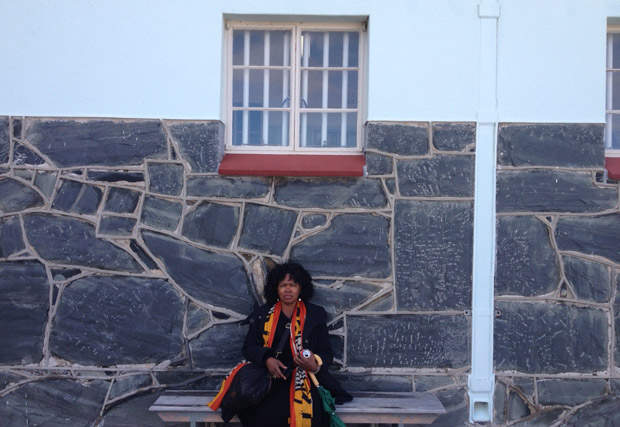
Seeing the World from Mandela's Prison Cell Window
Tene Wells has been my executive coach for the past two years and has taught me so much about reaching for big goals and being aware of the roadblocks that I set up for myself. This summer Tene traveled to South Africa on a Bush Fellowship and wrote the following account of her experience:
Last month, I traveled to South Africa to look out a window.
After a series of challenges in 2009, when I was fired, I questioned the trappings of my past successes and corporate security and decided it was time for me to do my soul work. I applied and received a Bush Fellowship. As I envisioned my new life I decided that one of my learning objectives would include a trip to South Africa to witness the sparks of a new economy. However, the bigger objective was to look out the window of Nelson Mandela’s jail cell.
Robben Island prison cell (martinplaut.wordpress.com)Of all the people who transcended their circumstances, no one personifies this more than Nelson Mandela – the man, the leader, the father of South African democracy and Nobel Peace Prize Laureate. Mandela was given a life sentence in 1964 at the age of 44, for treason against the system of apartheid of the South African government. Apartheid was the system of racial segregation under which the rights of the majority, of Black inhabitants of South Africa, were brutality deprived of their citizenship and banished to live only in townships; enslaved in their homeland.
Held in solitary confinement with his “co-conspirators” on Robben Island for most of his imprisonment, Mandela looked out the window of his cell and manifested a new reality. Allowed only one visit a year, and permitted to receive and send a one-page letter every six months, Mandela said of this experience, “there I had time to just sit and think,” and in that time, he envisioned a different South Africa.
In the 1970s, when I was a young adult beginning my career for social and economic justice, I marched in anti-apartheid rallies and learned about Nelson Mandela, his vision and the movement he inspired from jail.
I was appalled by the system of apartheid and the imprisonment of Mandela. While the world marched and demanded change, Mandela turned what he called “a misfortune” into a personal triumph when he emerged from imprisonment in1990 and four years later became the President of South Africa.
For many people, the end of apartheid, Mandela’s release from prison and election as president in South Africa was a miracle. How and who controls the power, to manifest the miracle is sometimes debatable, but we can agree our intentions create our reality and the steps we take to manifest our intentions can change reality.
Several years ago, I adopted, Henry David Thoreau the American poet, philosopher, abolitionist, and leading transcendentalist’s mantra, “Go confidently in the direction of your dreams and live the life you have imagined.” Every morning I meditate with this mantra. In all of my speaking engagements and workshops, I start or end with Thoreau’s quote. Although I have experienced the power of this statement many times, somehow I am always amazed when what I have imagined, becomes reality.
I have heard many stories about Mandela’s predictions of the future and the methodical daily actions he took to manifest his vision. In some accounts, I read that he envisioned his presidency from the window of his cell. How did he know he had the power to defeat apartheid? What did he see out that window that guided his actions for those many years of isolation?
My trip to South Africa was phenomenal in many ways. Professionally, I studied the genesis of an evolving economy (the South African government is less than 20 years old). I saw a multitude of social enterprises, and heard several stories demonstrating the entrepreneurial spirit of the Black people, of South Africa. I will continue to study and plan to return to South Africa many times, but my first responsibility is to write about the miracle to manifest a new realty to overcome insurmountable circumstances.
My own struggles seem so trivial in the shadow of Nelson Mandela, yet the lesson he inspired in me has the power to change anyone’s circumstances. When I applied for the Bush Fellowship, I declared that I would travel to South Africa to look out Mandela’s window to see my own future. I made a vision board and prominently placed South Africa and a map of the country, on the board to represent my desire and waited for the universe to respond.
I want to become the Suze Orman for poor people. With a fellowship from the Bush Foundation, I now have the resources and time to learn new skills, write a book, and become a motivational speaker.
Read the rest here.
MLK said "I have a dream", not "I have a plan"
Last week we celebrated the 50th anniversary of the March on Washington. It was a great time to reflect on what progress has been made and what is still left to do. One of my favorite futurists, Daniel Burrus, had a great article in the Huffington Post about why big visions and not 20 step plans are what actual get us the progress that we need. From Daniel:

When Martin Luther King, Jr. stood on the steps of the Lincoln Memorial fifty years ago and spoke to a great people about their greater future, he didn't say, "I have a plan." Instead, he shared a dream that provided a vision of equality and hope for a struggling nation. His dream was not to get elected and not to become rich; it was a dream that was to and for everyone--one meant to elevate the national conversation by providing a goal that at the time seemed impossible but would be worth achieving for all.
In the months, years, and now decades that followed that amazing speech, his dream became our dream and great strides forward happened and continue to happen every day.
Whenever I think of the "I Have A Dream" speech, I can't help but think of another great speech that shared a dream and that became a vision that shaped our nation.
As you have most likely guessed, I'm referring to the 1961 "Special Message to Congress on Urgent Needs" speech, where a young president Kennedy painted an insanely bold picture of our future in the language of a dare: "We'll put a man on the moon and get him back safely--within the decade."
The truly crazy thing, of course, is that we did.
What Martin Luther King, Jr. and John F. Kennedy employed was what I call Futureview, and right now it may be our most pressing national challenge.
Futureview is your ability to project yourself into the future and then look back at your present position from that future point of view. Futureview is not the same thing as a goal, plan, ambition, or aspiration. It is not something you hope for or try for. Futureview is the picture you hold, for better or for worse, of what you expect and believe about your future.
How you view the future shapes how you act in the present; how you act in the present shapes your future. Your Futureview determines the future you.
My concern is that for many Americans today, the Futureview is bleak.
In India and China, the prevailing Futureview is positive. Young and old alike are actuallyexcited about their future. The atmosphere crackles with an optimistic, can-do energy.
Visit the airport in Beijing and ride the train that transports passengers from terminal to terminal. On its walls you'll see posters highlighting Chinese entrepreneurs, their dreams and accomplishments. Get off the train and into the city: everywhere you look, you'll see evidence of seemingly impossible ideas becoming reality. Dreams are everywhere.
The result? These people are moving forward, proactively building their future. They see a bright tomorrow. So they're creating it.
And here in the U.S.? The American Futureview is mostly negative, filled with apprehension and fear. This is the first generation of parents since World War II who do not believe their children will have a better, richer life than they did.
Making the Impossible Possible
A few years ago, I had the opportunity to converse with Neil Armstrong, the first man to set foot on the moon. He said that in the years following Kennedy's articulation of that goal, NASA engineers would periodically hit a major roadblock and declare the goal impossible.
Each and every time, the response from those in charge was the same: "We're going to the moon."
So the engineers would go back to their benches with a renewed determination to do the impossible. Every time they hit a snag, that unshakable Futureview held them to their task.
"They kept solving those unsolvable problems," Armstrong added, "until one day, there I was--walking the lunar surface."
And here we are, fifty years later. Who is standing up to paint us an insanely bold picture of our future? Who is calling out that impossible dare, naming it so we can all go about the great work of achieving it?
Read the rest here.
New Job and Interview on Leadership
It has been a crazy few months. I've left a job and an organization that I love (my position is now posted if you'd like one of the best jobs in Minnesota philanthropy) to become the new President of the Minnesota Council on Foundations. I am a few weeks into the job and am really enjoying meeting MCF's members, getting to know my board, and working with a great team of people who are committed to making philanthropy more effective and impact issues critical to Minnesota's future.
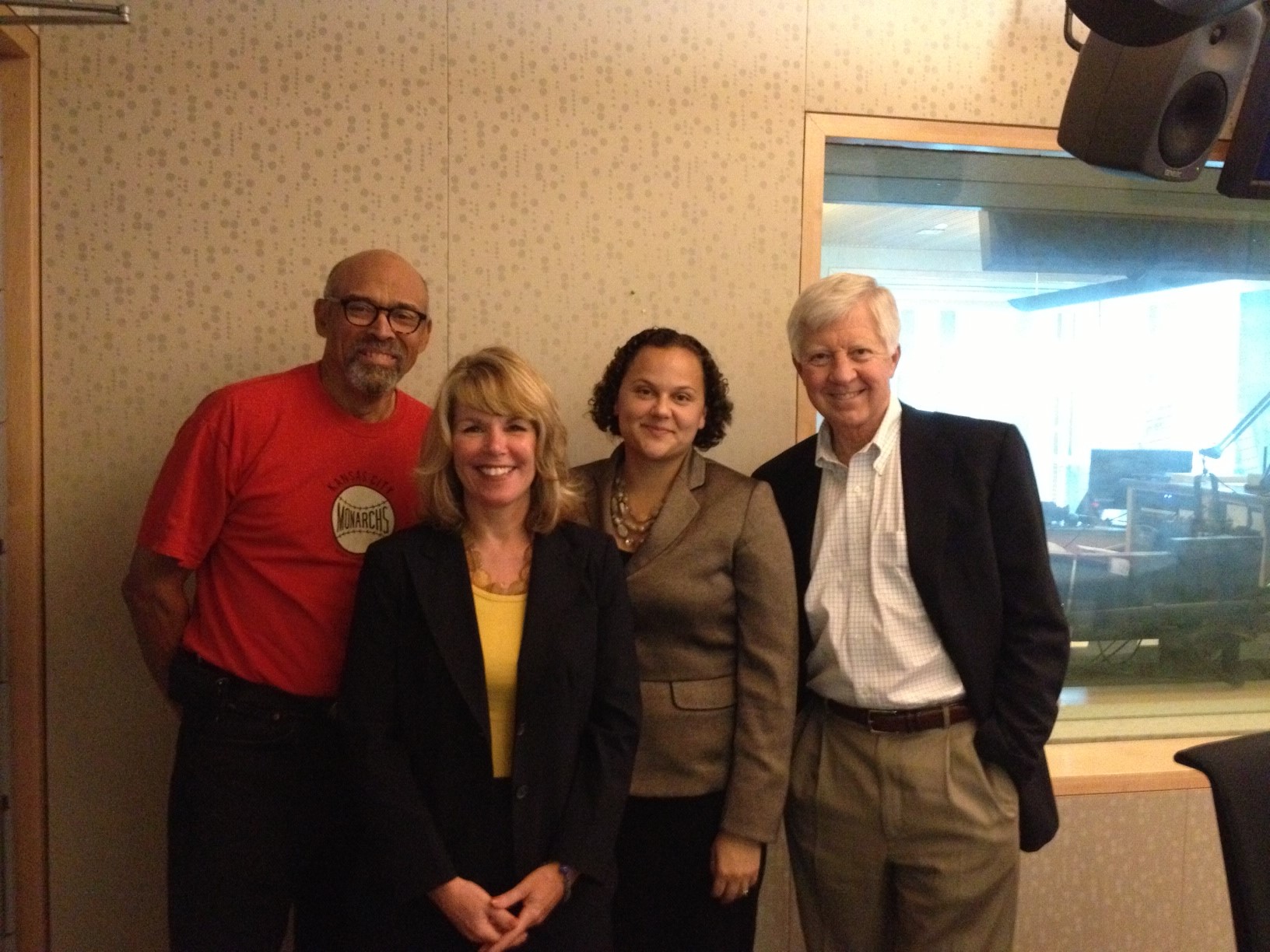
As part of the new gig, I have been doing a lot of media interviews including this piece at Insight News (the title Profiles in Excellence is a pretty high bar to live up to when you are first starting a job) and a really fun conversation on Minnesota Public Radio's Daily Circuit with Lou Bellamy of Penumbra Theater and Bill George the former CEO of Medtronic (that's us in the picture above with the host Kerri Miller) about what made us the leaders that we are today. You can hear the audio here.
Get the Nonprofit Rockstar Telesiminar Series FREE!
This week, we hosted our fifth and FINAL Nonprofit Rockstar teleseminar in our 2013 series. We had over 300 people registered for the call and we were able to answer a ton of great questions about nonprofit job searching! Ever since we launched this series, nonprofit professionals from all over the country have been emailing us, asking for access to these valuable, one-hour teleseminar recordings. Now, we've made them available to you for free when you purchase the ebook version of our popular nonprofit career development book, How to Become a Nonprofit Rockstar: 50 Ways to Accelerate Your Career.
Please forward this email announcement to your colleagues, mentees and staff who could benefit from this information and use it advance their nonprofit career.
Buy the How to Become a Nonprofit Rockstar Ebook by May 31 and Get All Five Information-Packed, Inspirational Teleseminar Recordings for FREE!
In addition to 174 pages of practical tips, strategies and real-life examples to help you ROCK your nonprofit career, you will also receive all FIVE one-hour teleseminar recordings at no additional cost. Each of these calls covers a specific nonprofit career or leadership topic and highlights expert speakers in the field such as Paul Schmitz from Public Allies and Allison Jones from Idealist. The content in these calls alone is worth more than $100. Here are the topics from all five teleseminars:
6 Ways to Rock Your Nonprofit Career in 2013
Fall Back in Love with Your Nonprofit Job: How to Get Re-Inspired, Become More Productive and Create a Life Beyond Work
Everyone Leads: 5 Ways to Step Up and Make a Greater Impact in Your Work
So You Wanna Be A Program Officer? How to Get the Job and Excel in the Work
Four Steps to a Successful Nonprofit Job Search
And if that wasn't enough, the ebook also comes with FOUR additional readers-only bonuses valued at more than $50, including workbooks to supplement the core material.
Wishing you the best in your nonprofit career,
Trista & Rosetta
Authors of How to Become a Nonprofit Rockstar: 50 Ways to Accelerate Your Career
P.S. If you purchase the ebook version of How to Become a Nonprofit Rockstar now you get all five one-hour recordings from our teleseminar series for free. If you purchased the ebook previously, you will have to buy it again to access these new information-packed, inspirational calls.
P.P.S. You won't find a better deal on nonprofit career development anywhere else. We know, because we've looked! Our book, combined with this valuable teleseminar series, will give you all the tools you need to ROCK your nonprofit career.