• Trista Harris
  • Retreats
  • Blog
  • Speaking
  • Books
  • DEI Resources
  • Consulting
  • Field Trips to the Future
  • Mastermind Retreats
  • Philanthropy Delegation

Trista Harris

  • Trista Harris
  • Retreats
  • Blog
  • Speaking
  • Books
  • DEI Resources
  • Consulting
  • Field Trips to the Future
  • Mastermind Retreats
  • Philanthropy Delegation
  • Menu

Top 10 Lessons Learned About the Future on Necker Island

December 26, 2016

I had the privilege of presenting on You & The Future of Doing Good on Necker Island at a conference hosted by Singularity U. Other speakers included: Emeline Paat-Dahlstrom, Raymond McCauley, Daniel Kraft, Gabriel Baldinucci, and Richard Branson.
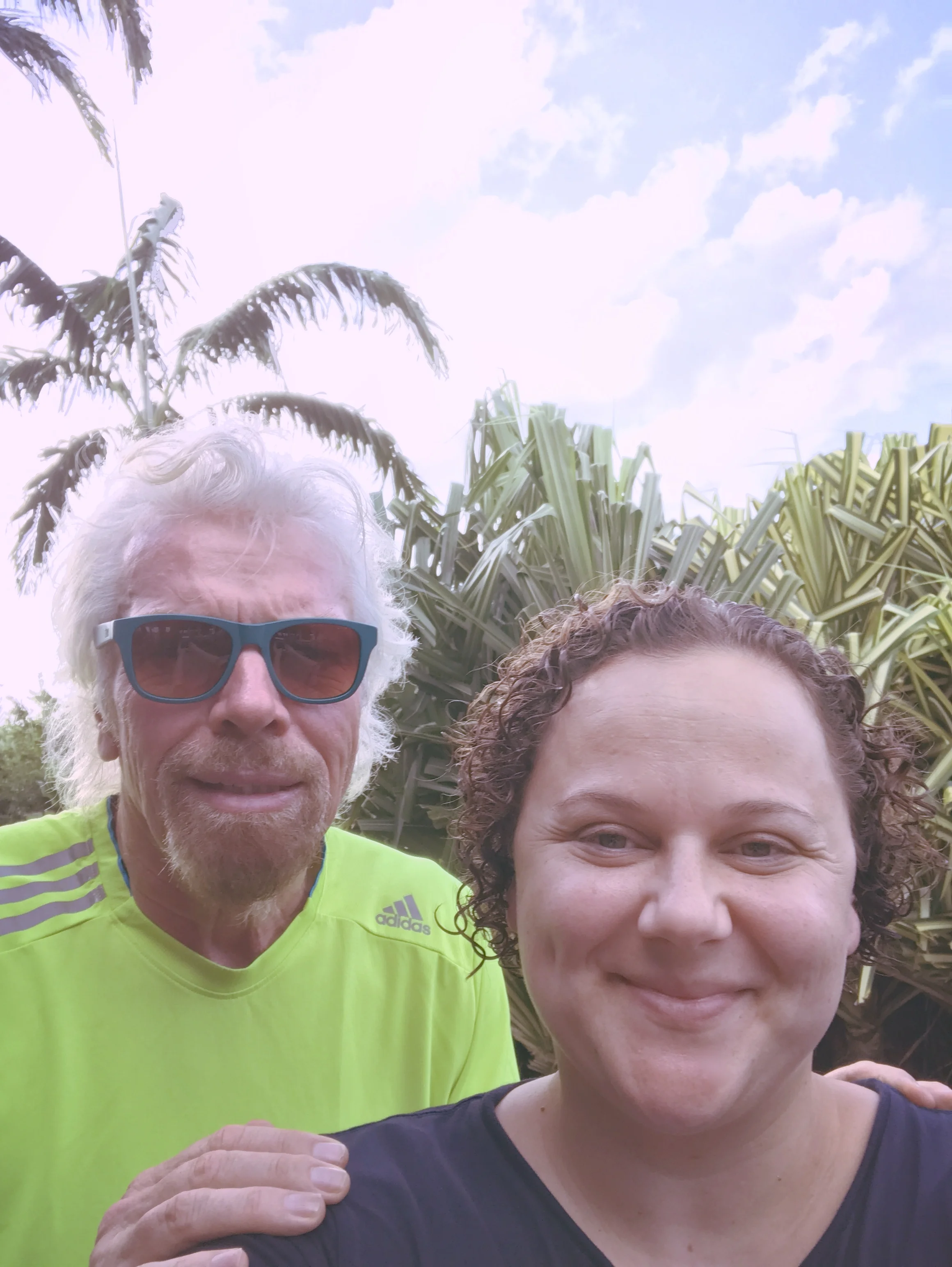
Trista Harris & Richard Branson

Trista Harris & Richard Branson


Top 10 Lessons Learned:

1. People are not made for an exponential world. Humans evolved in a world that is local and linear. A great primer on exponential technology from Peter Diamandis, the founder of Singularity U is below.

2. Singularity is near. Ray Kurzeil is predicting that Singularity will happen by 2045. "The technological singularity occurs as artificial intelligences surpass human beings as the smartest and most capable life forms on the Earth. Technological development is taken over by the machines, who can think, act and communicate so quickly that normal humans cannot even comprehend what is going on. The machines enter into a "runaway reaction" of self-improvement cycles, with each new generation of A.I.s appearing faster and faster. From this point onwards, technological advancement is explosive, under the control of the machines, and thus cannot be accurately predicted." This has huge implications for humanity. Most thinkers believe the singularity will be jump-started by artificial intelligence and robotics. These changes will be so fast, and so profound, that every aspect of our society will be transformed, from our bodies and families to our governments and economies.

3. Robotic technology is exploding. Look at this funny video of robots at the 2015 DARPA competition.

Look at the robots in 2016. They will only get faster and smarter with exponential technology growth.

4. Technology has lowered the cost of travel so global pandemics are much more likely. There is interested technology already being used that allows cellphones to broadcast health information in places where pandemics are happening. In the future there will be pandemic monitoring stations, in places like airports, that can detect airborne diseases and report on pandemics as they are happening.

5. We are in a race to use technology to solve problems that technology has created. Global warning is a prime example. Humanity isn't ready for a massive migration of 100's of millions of people due to rising sea levels. Look at all the chaos of one million Syrians migrating through Europe.  Technological solutions have to act quickly to prevent this.

6. Solar is an exponential technology, other traditional forms of energy are not. By 2023 solar power could meet all of the Earth's energy needs. Because solar is an exponential technology it also gets exponentially cheaper and more effecient to the point where energy will be almost free. Most wars are fought over energy or water. If we solve the energy grand challenge then clean water and abundant food will come soon after. Check out Elon Musk's plans for solar roofs below:


7. There were 400,000 preorders for the Tesla Model 3, which will have self-driving as a standard feature. Because all of the Tesla's are linked, the cars will learn from other driver's experiences and get smarter and safer on an exponential scale. Government regulation will soon catch up to self driving cars and car accident related deaths will plummet.

8. There is a 10,000 to 1 ratio of human using technology for good versus evil. But with increased connectivity there will be increased chances for those same technologies to get hacked. Cars, pacemakers, home security systems and even airplanes are at risk. We need to get in front of these threats to keep people safe.

9. Artificial intelligence will soon be used to teach school children. Imagine a Khan Academy that is precisely geared towards the needs of individual students. Time in class with teachers will be used to go over homework and time at home will be used for AI lectures. The European Union has already developed a tool for AI math tutoring called Smartick.

10. During this time of technological transition people get frustrated and fearful, which leads to political wildcards like Trump and Brexit. People start blaming immigrants and people of color for job losses when the real issue is robots and artificial intelligence. To address this we need to manage the financial implications for humanity through tools like Universal Basic Income. We also need to retrain our workforce in skills like project management, active listening and communications, and how to harness technology in new ways to meet humanity's needs. We will soon be partnering with artificial intelligence and robots and we need to develop the skills to do that effectively.

I think there is a huge role for foundations, nonprofits, and social entrepreneurs in this new world. We need a group of visionaries to come together to help us figure out how to use these new technology tools to make life better for humankind. Apply to join my FutureGood Community to learn more about these issues and harness technology to solve the issues that you are passionate about. 

Like what you are reading? Share this article with your network and expand the conversation.
 

1 Comment

Minnesota's Future- Originally Published in the Women's Press

November 12, 2016

As Minnesotans, we cannot continue to believe that our state is an idyllic and welcoming place - where all the women are strong, all the men are good looking, and all the children are above average. Not when Minnesota has some of the largest and most embarrassing racial disparities in the nation - in education, employment, home ownership and more - or when we watch Philando Castile die in our Facebook feeds. 

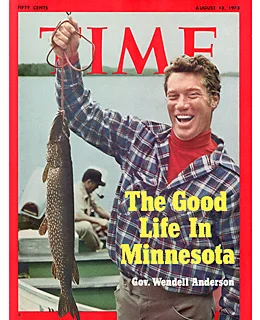
As someone who works closely with nonprofit organizations, and who is responsible for helping grantmakers and foundations be more effective, it is hard to see the current state of our community and to hear the too common narrative: "Minnesota used to be great, but our future is bleak." "Our best days as a state are behind us." "We peaked when Gov. Wendell Anderson proclaimed Minnesotans were living the good life from the cover of Time magazine." 

Yet I disagree with those sentiments. I think it is time for us to become hopeful again about our future. The increasing diversity of our state is a gift that will grow the economic and cultural vitality of our rural communities and inner cities alike. If we let them, our differences will make us stronger. People with varied backgrounds, experiences, skills and ideas, who respect each other, will deliver amazing results. 

The future doesn't just happen. It is something we create with the decisions we make and the actions we take today and every day. We are not passive actors in our own futures or in the future of our communities or our state. 

The future of our state is what we make it. So, please do your part through thoughtful actions, small and large. Smile at the person next to you in the grocery line. Get to know nonprofits and their work by volunteering. Give generously to nonprofits that are fixing the broken places in our society. Be an active and informed citizen who speaks up for and with those who are not as easily heard or listened to.

Comment

How a Jeffersonian Dinner Can Change the World

August 20, 2016

A few years ago I was introduced to the idea of a Jeffersonian dinner. When Thomas Jefferson was developing the idea of an American Democracy he invited people with different backgrounds and perspectives to share a meal and debate the future of the country. 

I've created a version of the Jeffersonian model called 831 dinners. It is 8 people, sitting together for 3 hours over dinner, having 1 transformational conversation about an issue of critical importance. After the Charleston Church shooting, I decided that I would host a dinner on the future of race relations in America. I have also hosted dinners on topics like civic disaster preparation and the future of philanthropy. A few things I have learned after 2 years of dinners:

  • A curated guest list is critical. Developing a guest list that gives you a diversity of backgrounds and experiences makes for a richer conversation. I aim for a balance of men and women, racial diversity, and people with a variety of professional experiences that relate to and are completely separate from the topic at hand. I have found that artists and organizers provide an interesting conversational balance to academics and foundation leaders. You don't have to know everyone at the table well, it is a great opportunity to deepen relationships. Don't invite people that won't listen. This is a conversation, not just an opportunity for one person to pontificate.
  • Make sure that guests have background on each other. For each dinner I share a bio of each participants and a photo. It allows the guests to have a little bit of context before they are at the table and they are less likely to cancel if they feel like they are part of a group. 
  • Food and wine makes everything better. For each meal I make sure that I understand dietary needs and provide a family style dinner. There are flowers and candles so that it feels like a dinner amongst friends and not a focus group. I pick foods that aren't too messy to eat and keep a bottle of wine on the table and a variety of non-alcoholic drinks.
  • Start with the personal. We start with introductions around the table and each guests answers the starting question that places them in the conversation as a human being not as a representative from a specific organization. An example is "when was the first time you felt hopeful about race relations in the United States". 
  • The host is a guide. The job of the host is to make everyone comfortable and move the conversation along. You also need to make sure that one person isn't dominating the conversation and that quiet voices get heard. 
  • Close with a commitment. Give participants an opportunity at the end of the conversation to talk about what they have learned or appreciated from the conversation and what they will do next as a result. 

Have you hosted a dinner that made a difference? Share what you learned in the comments.

Comment

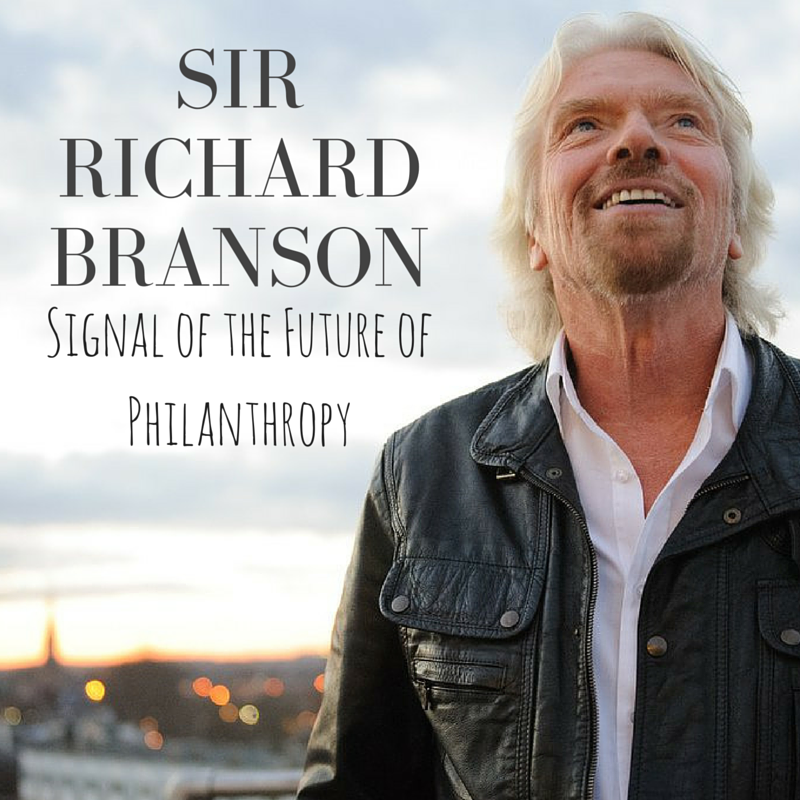
Sir Richard Branson: Signal of the Future of Philanthropy

May 1, 2016

I've spent the last 12 months on an expedition that has taken me to the far corners of the world trying to crack the code of the future of philanthropy. I've talked to visionaries, academics, space entrepreneurs, Afrofuturists, MacArthur Geniuses, and comment page trolls to try to get to the bottom of what philanthropy can do to create a future we can be excited about, instead of the dystopian wasteland of environmental and economic ruin that Hollywood has taught us to fear.

One of my most exciting conversation along this journey was with Sir Richard Branson, founder of Virgin Companies and the Virgin Unite Foundation. We had a wide ranging discussion about his philanthropic impulses. From his first act of charity- giving the clothes off of his back to a homeless man as a teenager to his hopes on his legacy- an end to international conflict.

Richard is a walking, breathing signal of the future philanthropy. The same entrepreneurial spirit that grew Virgin Companies from Student Magazine to a 400 company juggernaut is now being used to identify solutions for humanity's toughest challenges.

Richard's Signals of the Future:
Go Big
Leverage Cross Sector Partnerships
Follow Your Passion
Create Room for Others to Align with your Big Vision

See the conversation below


Special thanks to the Council on Foundations, Virgin Companies, and the Minnesota Council on Foundations for making this interview possible.

 
Comment
                                                                      &nbs…

                                                                                                              Special thanks to BlackFutureMonth.com for image

Black Future Month

February 28, 2016

The term Black Future Month has been sitting on my heart lately and I think the term gets to the bottom of my concern about futurism, which is can futurism be a tool that is used to build a stronger, more equitable society and who is creating the future for African Americans? I have been so blessed to be in spaces over the past few years where brilliant people are sharing visions and technologies that will transform our communities very quickly but often I am the only woman, person of color, or young(er) person in those spaces.

For many people of color, African Americans in particular, it feels luxurious to spend time thinking about the future when you are focused on literal survival. But if we don't have a shared future that we are working on building together it is so easy for movements to get splintered over tactics and tv time. Spending time collectively getting to the bottom of what a utopian future would look like for the African American community will help us get out of this burdensome place of constantly focusing on what is wrong with society, which is a threat to our mental health, and instead orient us to what we are creating together. This doesn't mean that we all sing kumbaya and ignore the broken systems in our community that are destroying us but it means that we identify what is broken and have a vision of what we want in its place. 

In futurism there is a concept called skipping the problem. It means that you pretend that the issue that you are working on is completely solved and then think about what the world would look like. By doing this, you can sometimes identify alternative strategies that can help you get to that preferred future. I think if we started spending time together over meals and during community meetings envisioning what our preferred future for the African American community looked like, we could harness the potential of the exponential change that is happening in society and not be held back by the chains of the past.

I'd love to hear how you are thinking about a future for the black community in the comments.

Comment
← Newer Posts Older Posts →
Tag Cloud Block
This is an example. Double-click here and select a page to create a cloud of its tags or categories. Learn more
  • Art
  • Day Trip
  • Love
  • Pic of the Day
  • Portrait
  • Things to Do
  • Leadership
  • Professional Development
  • Philanthropy
  • Nonprofit Rockstar
  • Nonprofits
  • foundations
  • Future
  • social justice
  • Program Officer
  • February 2025 (1)
  • January 2024 (1)
  • February 2023 (1)
  • July 2022 (1)
  • January 2022 (1)
  • November 2021 (1)
  • May 2021 (1)
  • December 2020 (1)
  • June 2020 (4)
  • May 2020 (2)
  • April 2020 (2)
  • March 2020 (2)
  • December 2019 (2)
  • November 2019 (2)
  • October 2019 (1)
  • September 2019 (1)
  • June 2019 (1)
  • May 2019 (1)
  • December 2018 (1)
  • December 2017 (1)
  • October 2017 (1)
  • April 2017 (1)
  • December 2016 (1)
  • November 2016 (1)
  • August 2016 (1)
  • May 2016 (1)
  • February 2016 (2)
  • January 2016 (1)
  • December 2015 (1)
  • November 2015 (1)
  • October 2015 (1)
  • April 2015 (1)
  • February 2015 (1)
  • December 2014 (1)
  • September 2014 (1)
  • July 2014 (1)
  • June 2014 (2)
  • April 2014 (20)
  • March 2014 (1)
  • February 2014 (2)
  • October 2013 (1)
  • September 2013 (2)
  • August 2013 (1)
  • June 2013 (1)
  • May 2013 (1)
  • March 2013 (3)
  • February 2013 (1)
  • January 2013 (2)
  • December 2012 (1)
  • November 2012 (3)
  • October 2012 (4)
  • August 2012 (2)
  • July 2012 (1)
  • June 2012 (1)
  • April 2012 (2)
  • March 2012 (2)
  • January 2012 (4)
  • December 2011 (2)
  • November 2011 (2)
  • October 2011 (3)
  • September 2011 (3)
  • August 2011 (1)
  • July 2011 (1)
  • June 2011 (1)
  • May 2011 (5)
  • April 2011 (8)
  • March 2011 (3)
  • February 2011 (2)
  • January 2011 (5)
  • December 2010 (3)
  • November 2010 (5)
  • October 2010 (4)
  • September 2010 (3)
  • August 2010 (4)
  • July 2010 (1)
  • June 2010 (4)
  • May 2010 (3)
  • April 2010 (10)
  • March 2010 (3)
  • February 2010 (4)
  • January 2010 (4)
  • December 2009 (5)
  • November 2009 (3)
  • October 2009 (4)
  • September 2009 (5)
  • August 2009 (5)
  • July 2009 (6)
  • June 2009 (8)
  • May 2009 (10)
  • April 2009 (9)
  • March 2009 (10)
  • February 2009 (8)
  • January 2009 (11)
  • December 2008 (7)
  • November 2008 (14)
  • October 2008 (9)
  • September 2008 (10)
  • August 2008 (7)
  • July 2008 (9)
  • June 2008 (9)
  • May 2008 (17)
  • April 2008 (8)
  • March 2008 (8)
  • February 2008 (8)
  • January 2008 (12)
  • December 2007 (6)
  • November 2007 (9)
  • October 2007 (6)
  • September 2007 (10)
  • August 2007 (9)
  • July 2007 (5)
  • June 2007 (6)
  • May 2007 (8)
  • April 2007 (5)

January 2025